
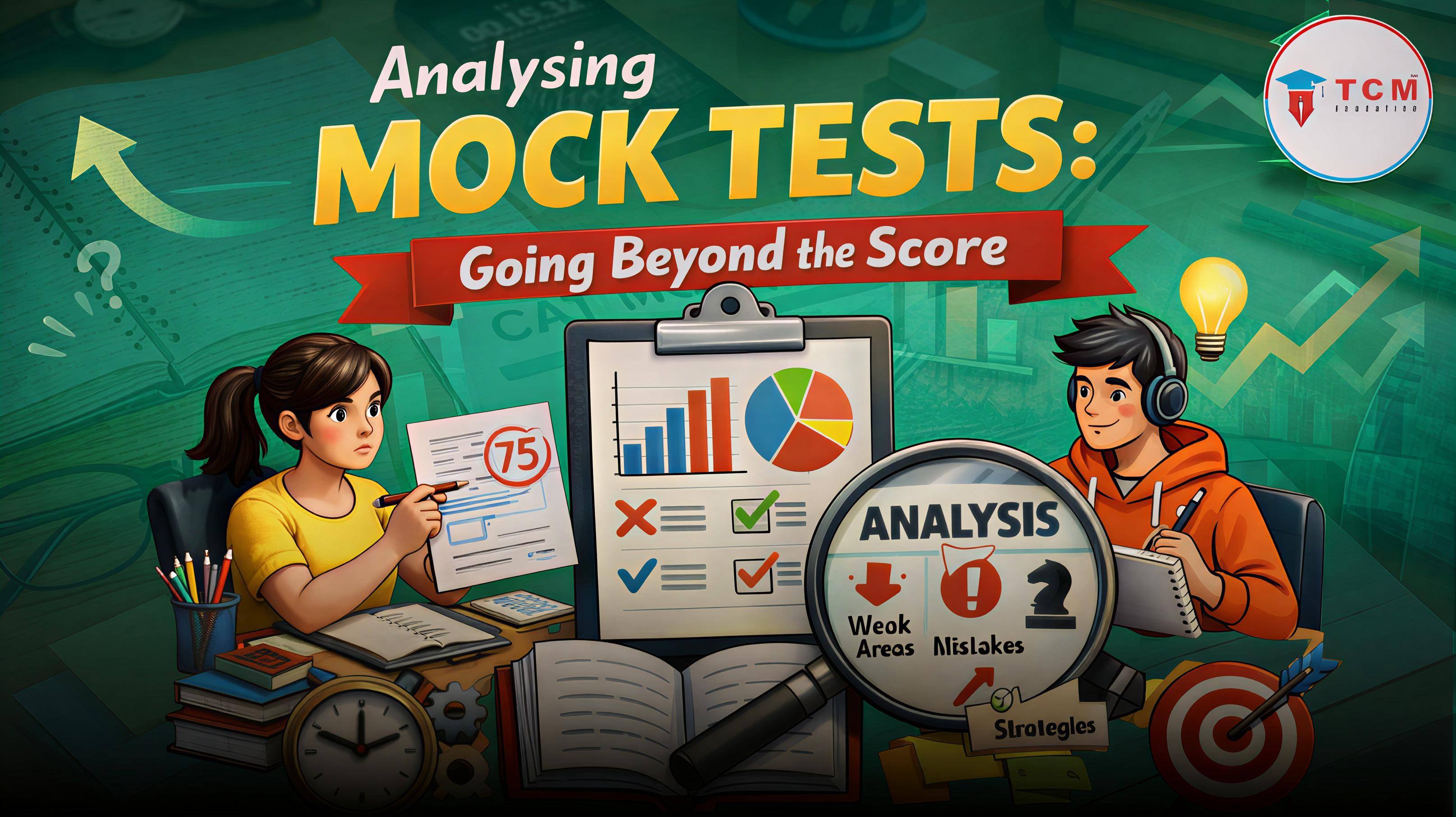
One of the most perplexing and emotionally taxing parts of getting ready for any entrance exam is mock test analysis. When a mock exam is over, most students' focus instantly turns to the score. It frequently causes either immediate relief or panic.
However, the true question is whether the score actually counts, particularly in the early phases of preparation. More significantly, how does it affect future strategy, confidence, and mindset ? Mock exams are psychological experiences as well as academic tools. A student's response to a mock result frequently determines whether it is a success or a setback.
The Emotional Approach:
Handling the First Reaction, the first and most important step in mock test analysis is managing emotions. Every mock triggers a response—satisfaction, disappointment, anxiety, or self-doubt. Ignoring these feelings does not make them disappear; it only allows them to silently influence decisions. The starting point is to accept the result without judgement. A mock score is feedback, not a final verdict. It highlights areas that need improvement but does not define ability or potential.
Acceptance creates mental space for learning. Instead of reacting impulsively, students must reflect rather than overreact. One poor mock often leads to exaggerated conclusions. Reflection asks better questions: which section went wrong, and was the issue conceptual, strategic, or emotional? Calm analysis leads to clarity, while overreaction leads to demotivation.
Stress is inevitable while preparing for a competitive exam, but it should not be destructive. Stress, if harnessed properly, leads to motivation. Most successful candidates see improvement not because mock tests are less challenging, but because they learn from their disheartening performance. Analysis of mock tests is the starting point of improvement. Each mistake uncovered at this stage prevents a loss of larger magnitude later on. Getting too worked up about scores, especially in the initial stages, hinders learning. Scores are variable; learning is cumulative.
The Practical Approach: Acting on Awareness
After achieving emotional understanding, the practical approach becomes more successful. This phase involves the identification of insights and their transformation into actions. Attempt patterns help identify whether simple questions have been overlooked or dangerous questions have been attempted unnecessarily. Time management is also an important aspect. Most mistakes are not made because of a lack of knowledge but because of poor time management. Time traps and hurried decisions assist in improving strategy for future attempts.
Mistakes need to be classified into knowledge gaps, careless mistakes, or time constraints. Every type of mistake requires a different type of solution. Most mistakes are treated in the same manner, which can hinder progress.
Each mock analysis should end with an action plan, which may include topics to work on, types of questions to practice, and strategy changes for the next test. Analyzing the mock test in the first twenty-four hours helps to recall the information better and learn it more sharply.
Conclusion
Mock tests are always looked upon as something scary, but the truth is that they are the safest place to make mistakes. They are the only place where students can fail and learn from their mistakes without any fear of punishment. When students learn to handle mock tests with emotional maturity and practical discipline, they become the best tools for measuring progress.
Mock test analysis is not about being perfect. It is about being aware, consistent, and making progress. When students learn to move beyond the result, mock tests are no longer scary but become a useful tool for success.
SO REMEMBER “Every mock is feedback, every mistake is progress.”
